Key Takeaways
- Meta's TRIBE v2 can predict brain responses to music, language and visual stimuli.
- Prediction is not understanding. A model that forecasts a reaction is not the same as a founder who understands a customer.
- The more powerful the tool, the more necessary the human. Every founder needs a refusal list.
A few days ago I had a conversation with a CMO about the moment an AI should stop and a human should step in. We called it the handoff. She said the teams that solve it first end up with the better product. I agreed.
Then Meta announced TRIBE v2.
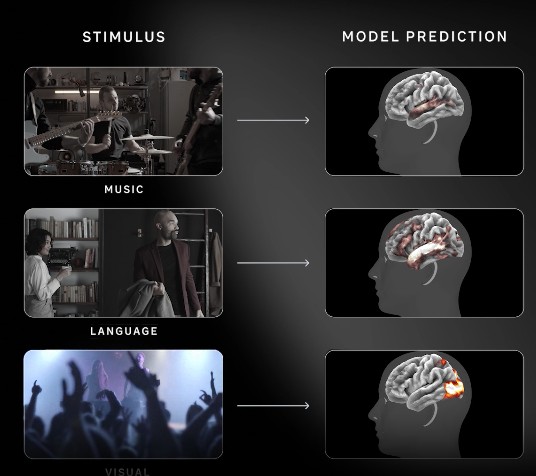
TRIBE v2 is a foundation model that predicts how the human brain responds to images, sounds and language. It was trained on more than 700 volunteers. It can run experiments in silico, meaning without real people. It offers a 70x resolution increase compared to similar models. And it is open for researchers.
On paper, it is a scientific breakthrough. In practice, it is a mirror for every founder who thinks AI can replace human judgment.
Here is what I keep thinking about.
If an AI can predict how your customer will feel, you might be tempted to skip the part where you ask them. If an AI can simulate how your user will react, you might be tempted to skip the part where you listen. If an AI can generate the response your brain would have, you might be tempted to skip the part where you decide.
That is the trap. Not the technology. The temptation.
TRIBE v2 does not replace the need for criteria. It increases it. Because the more a machine can predict, the more important it becomes to decide what you will not let it do.
The CMO called it the refusal list. I call it the product brief. The moment a founder writes down what the AI should never say, never decide, never automate, the product stops being a demo and starts being a business.
Three things I would tell any founder looking at a model like TRIBE v2.
First. Prediction is not understanding.
A model that forecasts a brain response is not the same as a founder who understands a customer. Use it to inform, never to replace. The data tells you what happened. The founder decides what it means.
Second. Speed is not direction.
TRIBE v2 can run experiments faster than any lab. But speed without a hypothesis is just noise. Decide what question you are trying to answer before you ask the machine. A fast answer to the wrong question is still the wrong answer.
Third. The handoff is the product.
Every time the AI stops and a human steps in, you are defining your brand. That moment is not a failure of automation. It is the moment your values become visible. The teams that design that moment with intention are the ones that build trust. The ones that leave it to chance are the ones that lose it.
I spent thirty years building brands. I left one when it lost its soul. I have seen what happens when speed wins over judgment. And I have seen what happens when a founder decides what their product will refuse to do.
TRIBE v2 is not a threat. It is a reminder. The more powerful the tool, the more necessary the human.
So here is my question for you. If an AI could predict exactly how your customer would react, what would you still refuse to automate?
Source: Meta AI. Read the original TRIBE v2 announcement.